
By Kesaobaka Pelokgale

As someone who has walked the corridors of finance in both the public and private sectors, I write this not only with a sense of professional responsibility but with a heart heavy with concern for our country’s future. The misallocation and misuse of public funds is not just a line item in an audit report, it is a betrayal of trust, a delay in progress, and a disservice to every hardworking Motswana who dreams of a better tomorrow. This piece is not politically motivated and definitely not meant to speak against the previous or current regime. It is directed to the individual citizen and the civil servants who are the harbingers of this uncertain fate, regardless of political affiliation.
What we can no longer ignore is that we cannot afford to treat public funds as anything less than sacred. Every single thebe that enters government coffers represents potential, potential to build, to heal, to educate, and to empower. When that money is mishandled, wasted, or stolen, it is not the government that suffers,it is the people. It is us. This article focuses on how to combat against the gross misuse of public funds and the future that awaits us if we do not stand firm in our resolve.
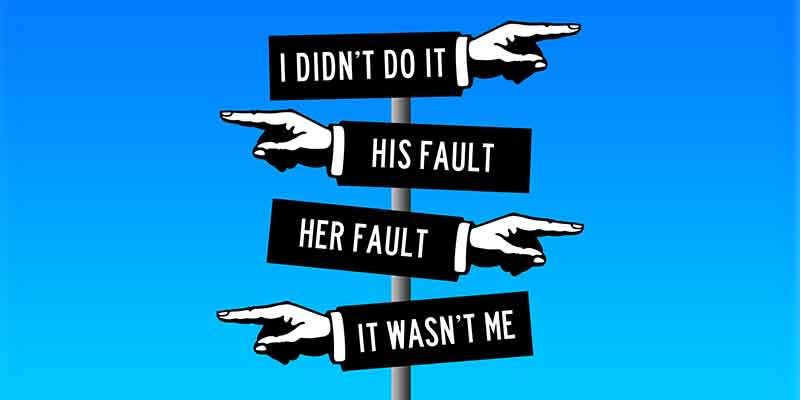
Build Systems That Hold People Accountable
Effective public financial management starts with accountability. Accountability is not just about punishing wrongdoing, it’s about creating systems that make wrong-doing difficult in the first place. Too often, we rely on manual processes, outdated controls, and informal oversight mechanisms that create gaps wide enough for corruption and mismanagement to thrive.
Segregation of Duties: We need clearly defined roles and responsibilities so that no one person has complete control over any financial transaction. If one person can initiate, approve, and disburse funds, the system is inherently flawed. Dividing these roles reduces the opportunity for abuse.
Independent and Frequent Audits: Internal and external audits should not be rare events or tick-box exercises. They should be frequent, thorough, and independent of influence. Risk-based auditing, targeting areas most vulnerable to misuse, must become standard practice.
Lifestyle Audits: We must normalize lifestyle audits for public officials. If a person’s standard of living significantly exceeds their known income, it should raise a flag. These audits serve as a deterrent and promote a culture of honesty in public service.
Building these systems isn’t about suspicion, it’s about responsibility. We owe it to our people to safeguard their resources with the same rigor we would protect our own households.

Let Technology Be Our Watchdog
We are living in an era where technology can be our greatest ally in the fight for financial integrity. Unfortunately, many of our systems are still trapped in analog processes and paper trails that are easy to manipulate and difficult to trace.
E-Procurement Platforms: Digital procurement platforms automate bidding, evaluation, and payment processes, reducing the room for under-the-table deals. These systems log every step, making it easier to audit and verify the process.
Blockchain Technology: Blockchain offers transparent, tamper-proof financial records. With this, every transaction is logged in a way that cannot be edited or hidden. It creates a permanent record that anyone can verify.
AI and Data Analytics: Advanced analytics and machine learning can flag suspicious transactions in real time. These technologies help identify patterns and anomalies that a human might overlook, making fraud detection faster and more accurate.
Implementing these tools is not about replacing people, it’s about empowering them to do their jobs better, and more ethically.
Enforce the Law, Without Fear or Favor
Misusing public funds is theft. Let’s call it what it is. And like any theft, it should carry consequences. But enforcement only works when it is impartial, consistent, and unrelenting.
Whistleblower Protection: We must create a safe environment for individuals to report financial misconduct. Whistleblowers should be praised for their courage, not punished for their honesty.
Tough Penalties: When people misuse public funds, there must be meaningful consequences, fines, dismissal, criminal charges. Justice must be visible and firm to serve as a deterrent.
Independent Oversight Bodies: Institutions like anti-corruption units such as the DCEC, audit offices, and ombudsmen must operate free from political interference. Their independence is key to ensuring that investigations and enforcement are not compromised.
If we want to instill trust in the system, we must show that no one is above the law. Not politicians. Not CEOs. Not civil servants.

Put Power in the People’s Hands
Citizens should not be passive observers of how their taxes are spent. When the public is engaged in budgeting and monitoring, it not only increases transparency but also improves the effectiveness of public spending.
Participatory Budgeting: Citizens should be involved in setting priorities, especially at the local level. When people decide where money goes, it’s far more likely to be spent wisely.
Community Monitoring: Civil society organizations and watchdog groups must be supported in monitoring government projects. Whether it’s a school being built or a road being tarred, someone from the community should be able to verify that the work is being done and the money is being used properly.
Public Financial Transparency: Budgets, procurement data, and spending reports should be accessible to all. Open data portals allow citizens, journalists, and researchers to track and analyze public spending.
Engaged citizens are the best defense against corruption. When people are informed and involved, the space for misuse shrinks dramatically.

Culture and Competence Matter
Even the best systems can fail if the people operating them lack integrity or competence. That’s why ethics and training are just as important as policies and procedures.
Training Public Servants: Continuous education on finance laws, procurement regulations, and ethical conduct should be mandatory. Many errors are not malicious, they stem from ignorance. Training solves that.
Enforcing a Code of Conduct: A clear, enforced code of ethics sets expectations for behavior. Violations should carry consequences, not just in law, but in professional reputation.
Leading by Example: Ethical leadership at the top inspires accountability at every level. Leaders must not only talk the talk but walk the walk.
A culture of integrity is built from the inside out. It starts with values, and values must be lived.

This is not just a professional plea, it’s a personal one. I love this country. I love its people. I believe in our potential. But we cannot reach it if we continue to allow our resources to be drained by greed, negligence, or inefficiency.
Misusing public funds is not a victimless crime. It is a stolen classroom. A delayed hospital. An unfinished road. It is opportunity lost, and dignity denied.
We must act. We must reform. And most importantly, we must care. Because financial integrity is not a technical issue, it is a moral one. And the time to fix it is now. Let us not be remembered as the generation that watched silently while things fell apart. Let us be remembered as the generation that stood up, spoke out, and fixed what was broken.
Our country, our people, and our future deserve nothing less.

 Finance Corner With Pelokgale